Bringing Canada into DUNE, an international flagship neutrino experiment
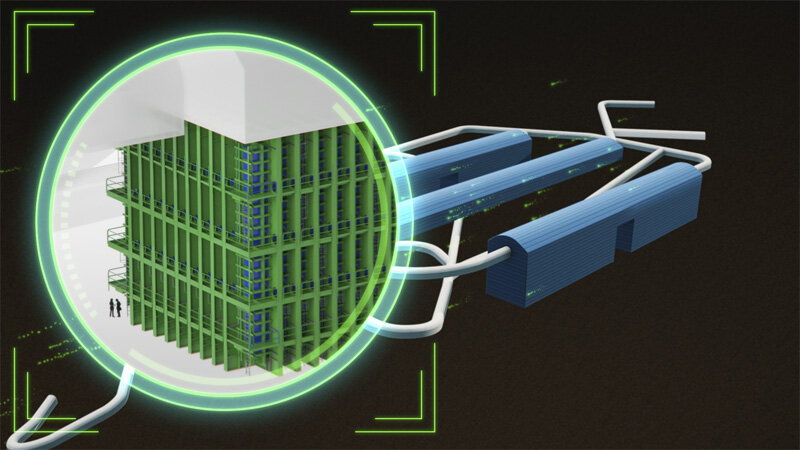
Illustration: Sandbox Studio/Fermilab
The Deep Underground Neutrino Experiment (DUNE) is a complex of detectors under construction in the United States. DUNE is dedicated to studying one mysterious elementary particle: the neutrino. They are the most abundant matter particles in the universe, yet very difficult to detect. DUNE will measure how neutrinos change over time, a phenomenon known as oscillations. It will also be able to observe neutrinos from a core-collapse supernova in the Milky Way, allowing us to peer inside a newly formed neutron star and potentially witness the birth of a black hole.
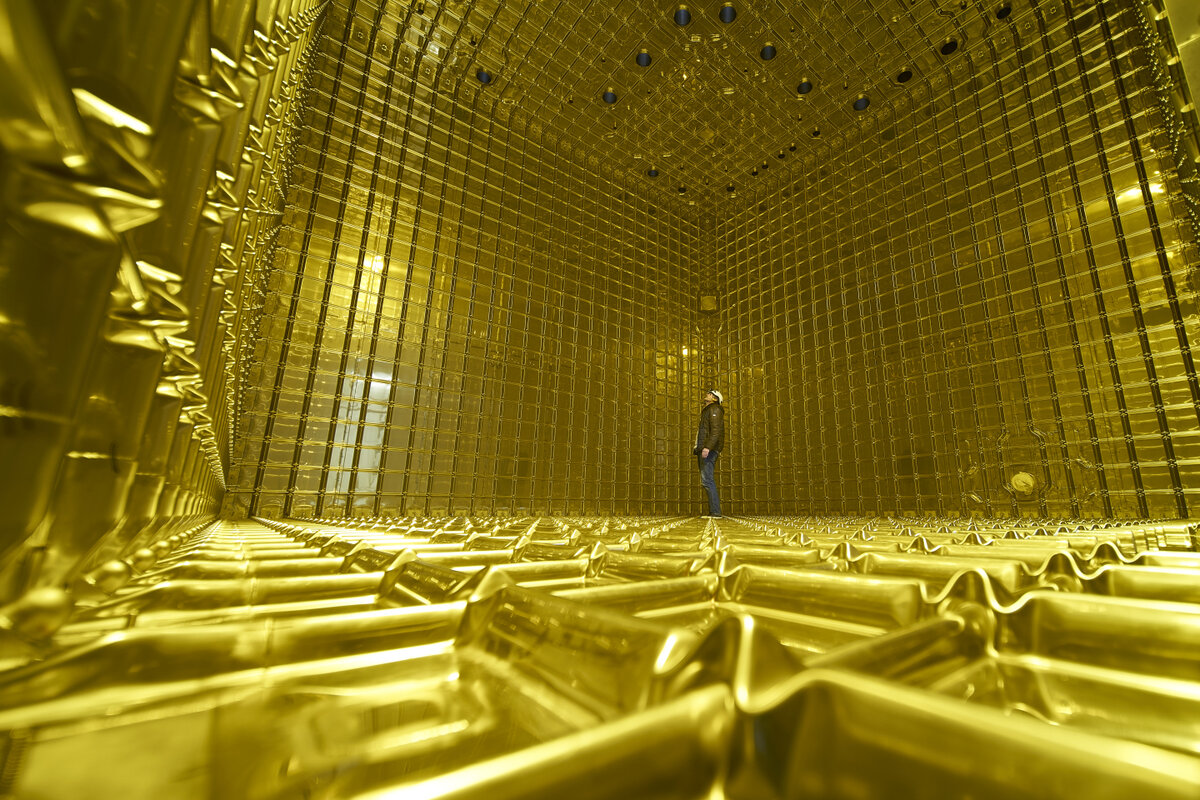
Inside the cryostat of ProtoDUNE, a prototype built at CERN to validate the liquid-argon chamber technology at scale.
Credit: CERN
The giant DUNE Far Detector modules will record images of particle tracks created by neutrinos colliding with argon atoms.
Credit: Fermilab
In 2019, while I was faculty at York University, I co-launched the DUNE-Canada effort with two other principal investigators. We secured three-year funding from the Natural Sciences and Engineering Research Council (NSERC) to start the first Canadian effort, then five-year funding from the Canada Foundation for Innovation (CFI) to build a cryogenic facility for ArgonCube, a research and development initiative designing the advanced Liquid Argon Time Projection Chamber (LArTPC) technology used for the Near Detector.