Characterizing the ATLAS inner tracker (ITk) prototype with an infrared camera
During my postdoctoral fellowship at the Deutsches Elektronen-Synchrotron (DESY) in Germany, I worked on the ATLAS upgrade of its inner detector, which is a subsystem at its centre that reconstructs the trajectories of the charged particles created at each collision.
Why upgrade? The Large Hadron Collider at CERN near Geneva, Switzerland, will operate from 2030 in a new regime of more intense collisions. It’s the High-Luminosity LHC project. The luminosity is a quantifier proportional to the number of collisions that occur in a given amount of time. More collisions, more data. And with more data, more possibility to discover a rare new process we haven’t seen yet.
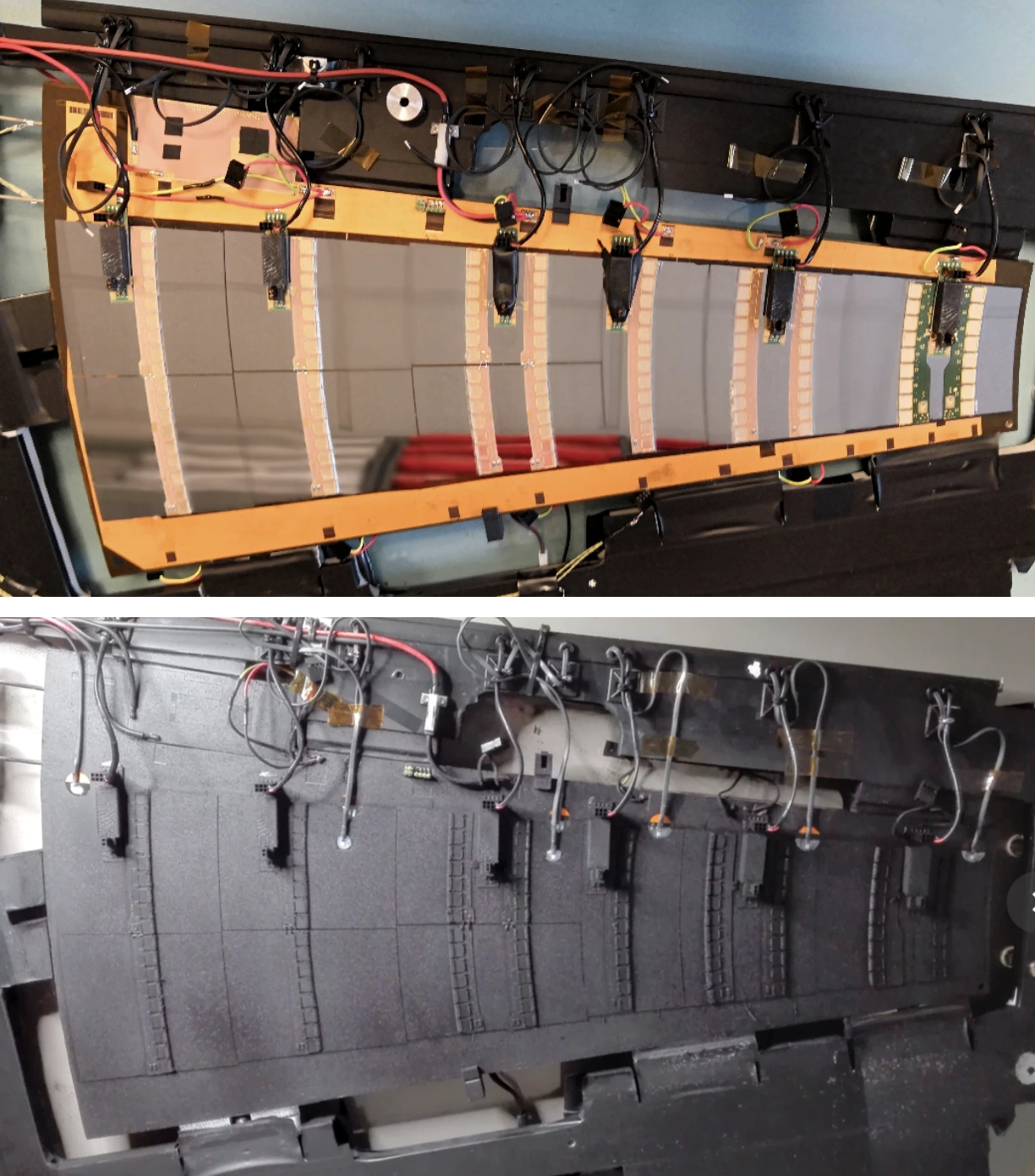
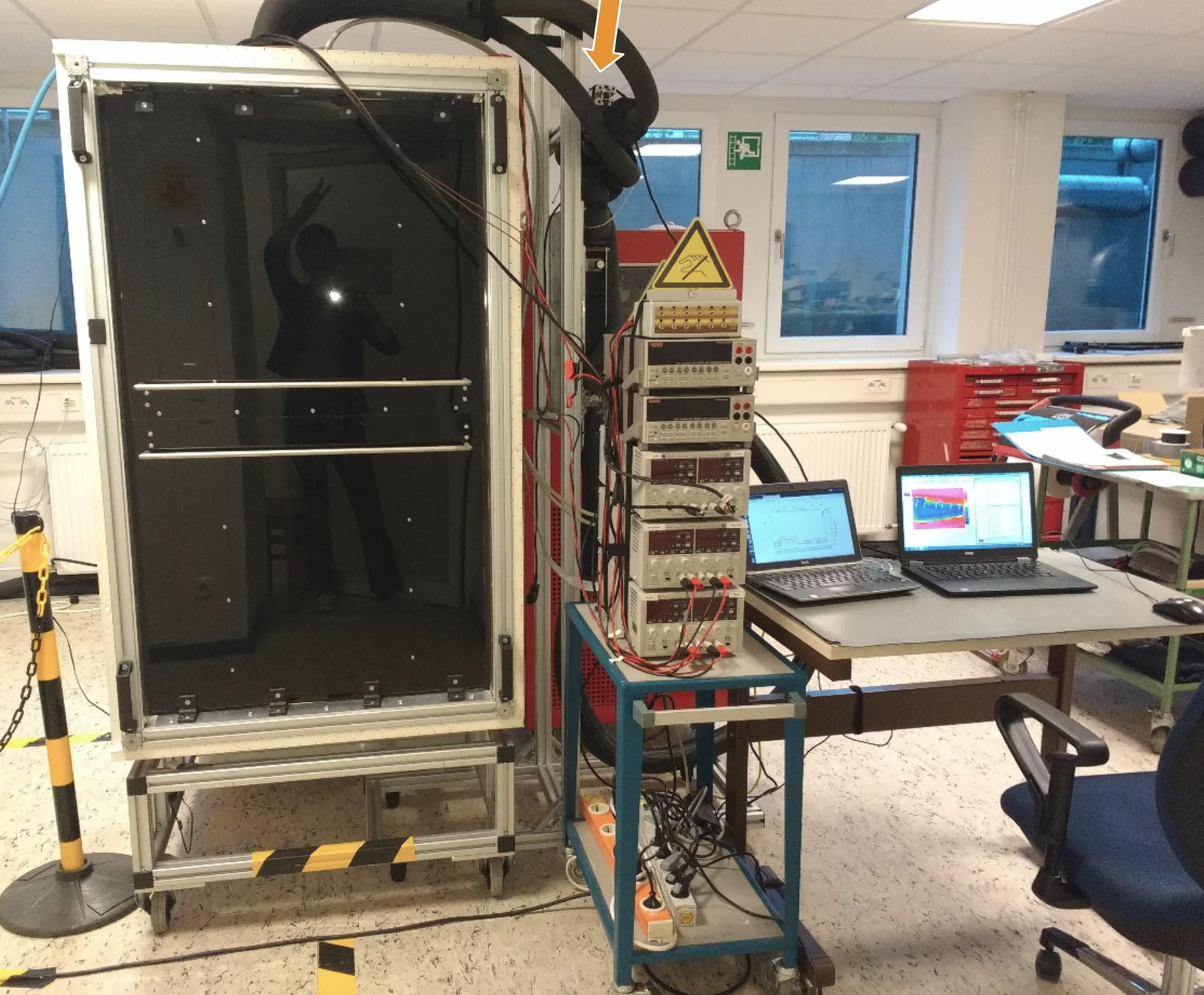
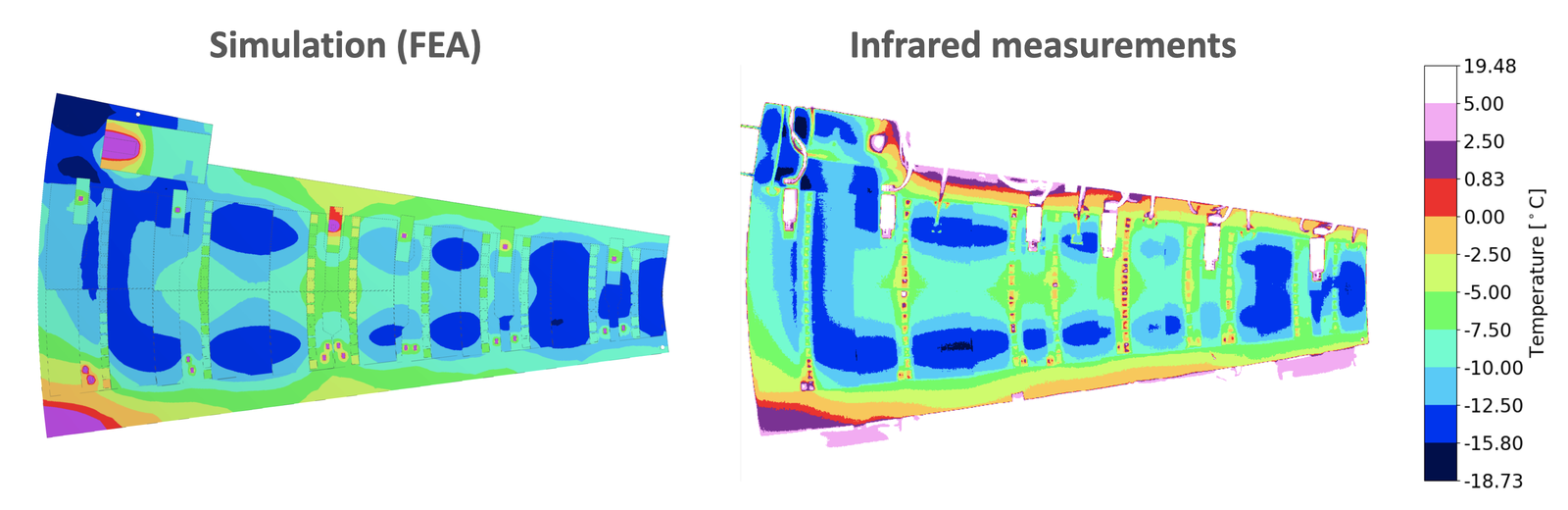
Thing is: some parts of the LHC detectors are not currently ready for this harsher environment. They need to be rebuilt with better readout systems for both withstanding and recording more collisions. ATLAS is no exception: its inner tracker needs to be replaced. Prototypes of the new inner tracker (ITk) were built at DESY when I started my postdoc and needed to be tested. I led a team of 3 engineers, 3 technicians and 4 students to perform the first thermal characterization of the support structures holding the silicon sensors. The goal is to ensure there will not be overheating of the sensors due to the radiative environment or the powered electronics. With a custom testbench, we successfully delivered several measurement campaigns in various conditions, all matching the simulations.
Watch the second part of the tele-colloquium I gave for McGill University’s Physical Society in 2020: Recording (from 29:39) ↗