The ATLAS detector at the CERN Large Hadron Collider
Lying in an underground tunnel of 27 kilometre circumference under the French-Swiss border near Geneva, the Large Hadron Collider (LHC) accelerates particles close to the speed of light and lets them smash together at the centre of big detectors. The task for experimental particle physicists is to reconstruct the trajectories and identify the particles produced during these collisions, to then measure their properties for ultimately inferring on the presence of new processes in subatomic physics.
ATLAS (A Toroidal LHC ApparatuS) is an arrangement of concentric sub-detectors, each recording specific information from the particles produced in a collision. It is the largest volume particle detector ever constructed. This short video ↗ from the great movie Particle Fever ↗ gives an idea of what it feels like seeing ATLAS for the first time.
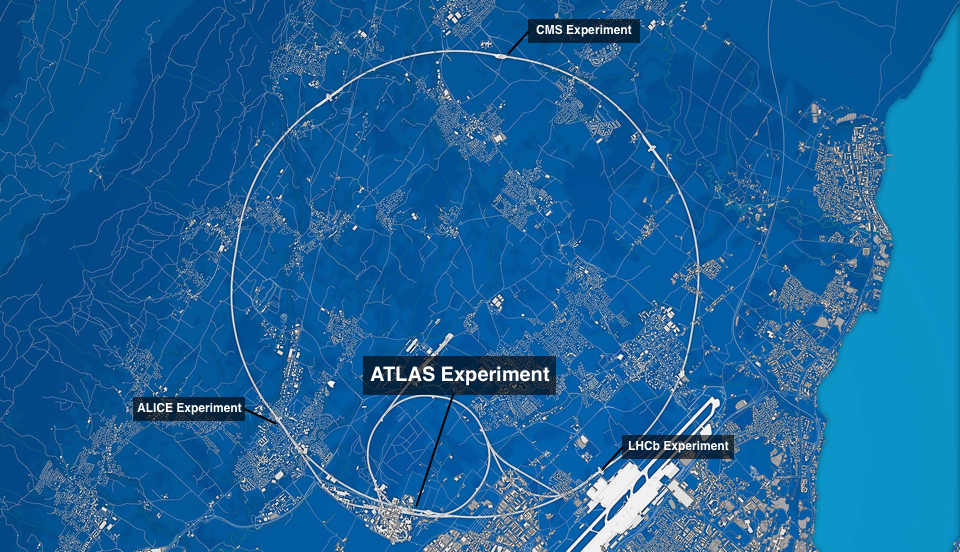
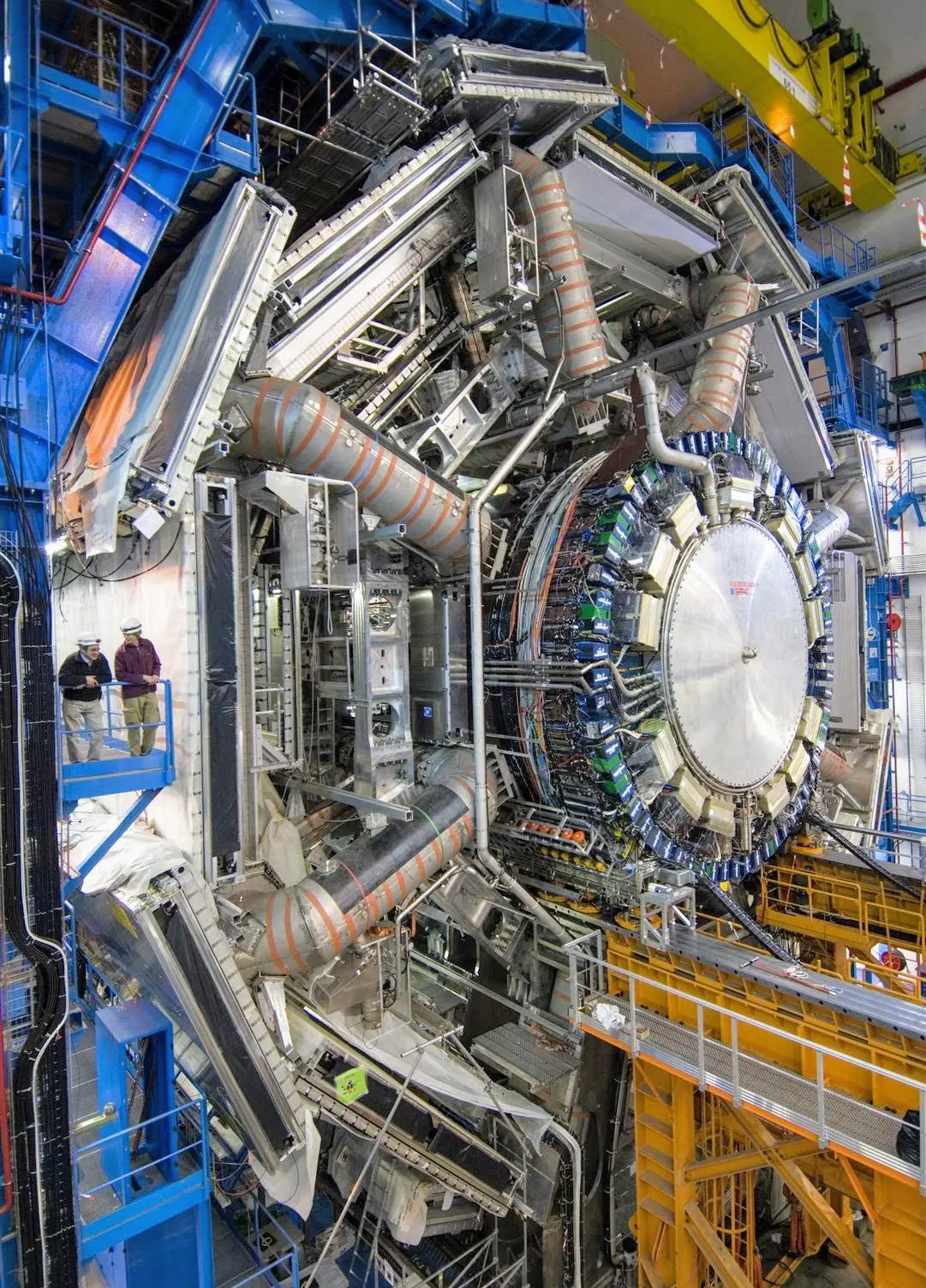
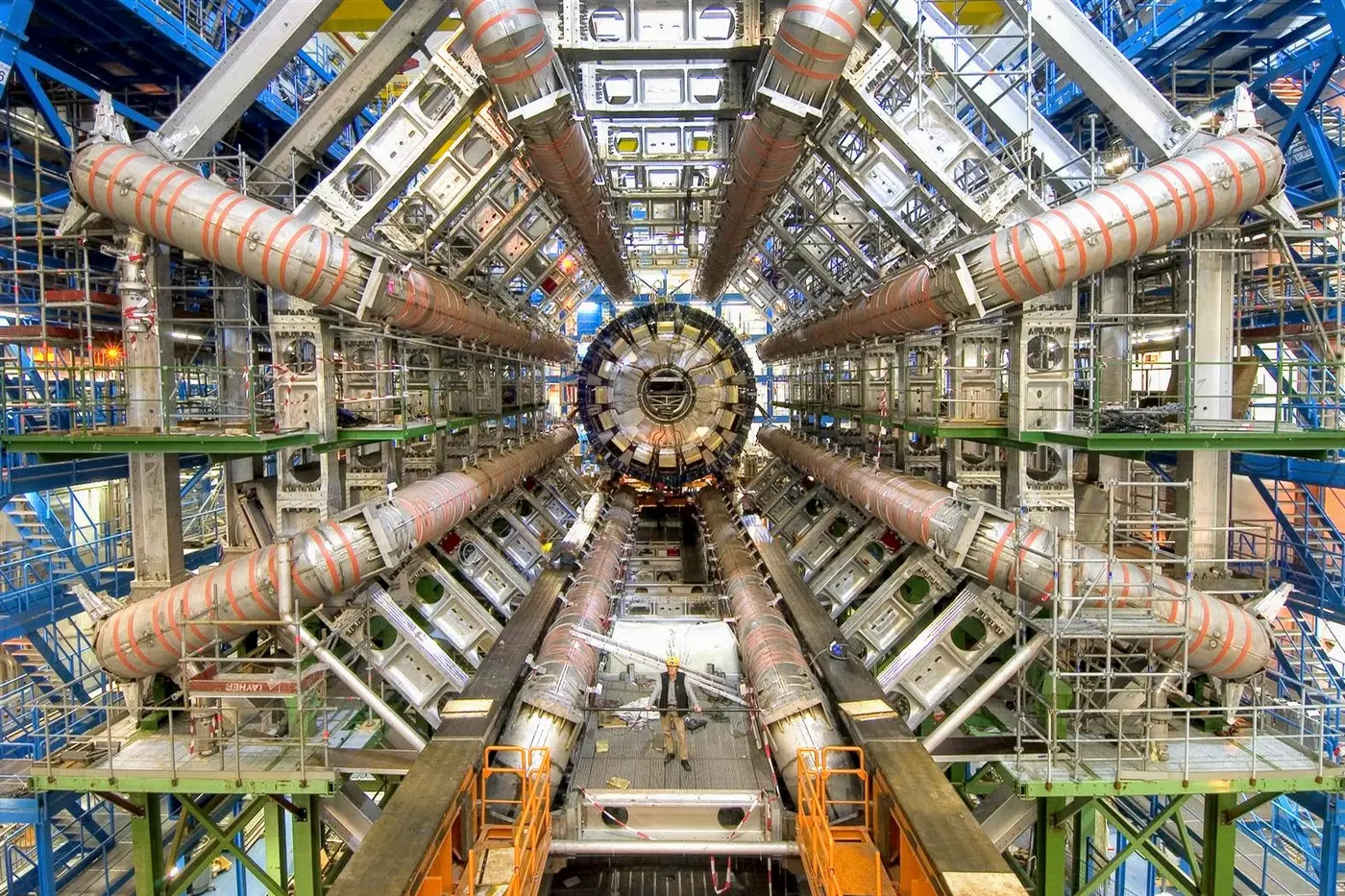
I started my Ph.D. just before the big LHC’s success in 2012: the discovery of the Higgs boson, a long-sought particle responsible for giving massive particles their observed masses (the understanding of mass at the subatomic). I was relieved as my Ph.D. analysis required the presence of the Higgs boson! Moving on as a postdoc, I contributed to the observation of a rare process, also involving the Higgs boson: its production in association with a top quark pair (quarks are constituents of protons and neutrons). I also had fun playing with an infrared camera to characterise the thermal performance of the next generation of particle detectors; this was part of the ATLAS upgrade program, preparing for an enhanced collision phase called the High-Luminosity LHC Project.
What fascinates me with collider physics:
The mere fact that we, as a species, are building the most gigantic and complex machines to discover the tiniest pieces of matter to ultimately answer a very simple question: what is everything made of?
Learn more
About the Large Hadron Collider (CERN’s website) and frequently asked questions ↗.